
Keyhole hernia repair fixes a hernia through a few small cuts instead of one larger incision, with a mesh placed from the inside to reinforce the weak spot.
Hernias are common problems that need the expertise of a qualified surgeon. Keyhole (laparoscopic) hernia repair is a minimally invasive alternative to traditional open surgery. It avoids a larger incision, which can cause more pain and discomfort and may take longer to heal.
The surgeon makes several small incisions in the abdominal wall and inserts a laparoscope (a thin telescope with a tiny camera) so that a hernia surgeon like Dr Kan Yuk Man can see inside the body.
The weak spot is then covered from the inside with a mesh, which is fixed in place. The mesh reinforces the muscle wall so the hernia is less likely to come back.
Not always. The size, type and location of the hernia, your general health, and whether you can have a general anaesthetic all affect which approach is best.
Hernias on both sides, hernias that have come back after a previous open repair, and people who want a quicker return to activity.
People who cannot have a general anaesthetic, since open repair can be done under local or regional anaesthesia, and some large or complex hernias.
That is why it is important to speak with an experienced hernia surgeon like Dr Kan Yuk Man, who will discuss all available options and help you decide how to manage your hernia.
The Ministry of Health fee benchmarks for the surgeon’s fee in private hospitals, including GST:
Source: MOH fee benchmarks for surgical procedures. See our hernia treatment guide for more on costs.
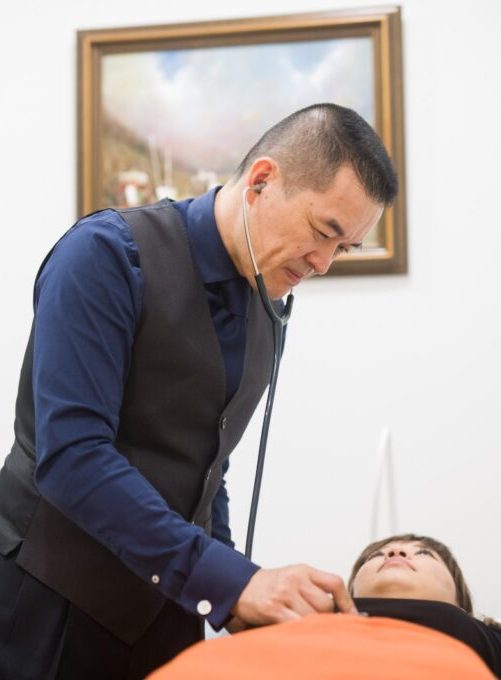
Make an appointment with Dr Kan Yuk Man for tailored advice on the best way to manage your hernia.
Disclaimer: This article is for general information only and is not a substitute for medical advice. Please consult a qualified doctor for advice specific to your situation.
Clinical guidance based on the international guidelines for groin hernia management (HerniaSurge Group, 2018).